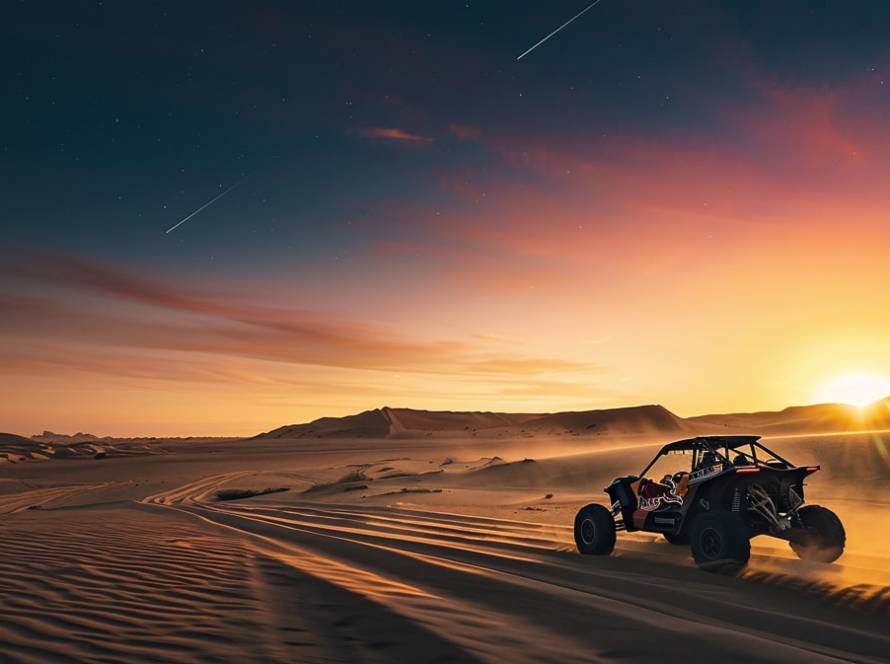
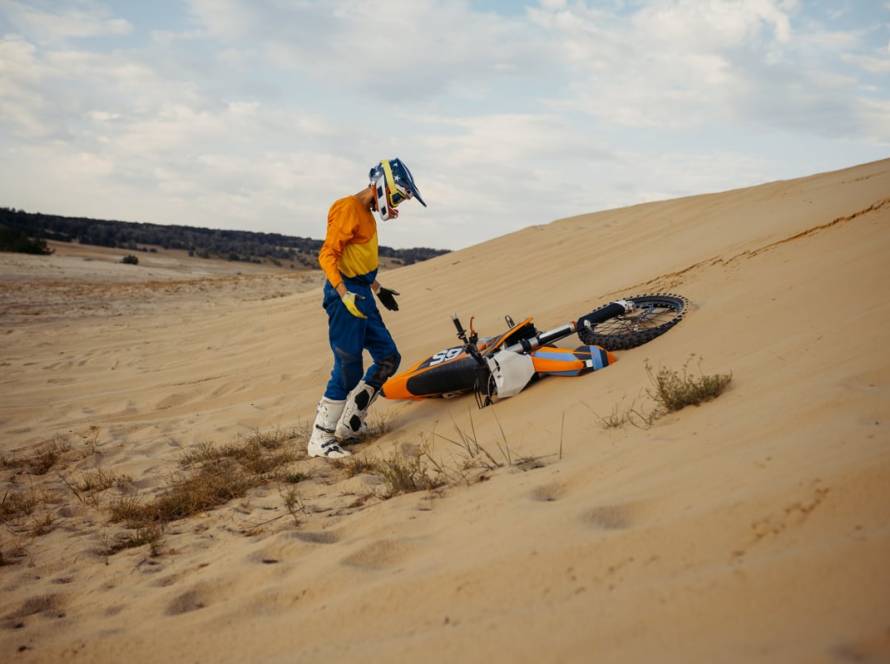
Imagine standing atop a shimmering crest in the Dubai desert, where the golden horizon stretches infinitely toward the sky. The air is warm, the sand is soft, and the only thing missing is the roar of an engine ready to propel you into an unforgettable journey. For many travelers, a dirt bike adventure is the highlight of their visit to the Emirates, offering a unique blend of natural beauty and high-octane excitement. However, as you stand at the edge of the dunes, a critical decision awaits: which machine will be your partner in this expedition?
For decades, the world of off-roading has been divided by the age-old debate: 2-stroke vs. 4-stroke. If you are a beginner, these terms might sound like technical jargon, but they actually define how the bike feels, sounds, and reacts to your touch. One is known for being lightweight and “snappy,” while the other is famous for its steady, reliable power.
When you are navigating the vast Arabian Desert, choosing the wrong bike can make the difference between a smooth, confident ride and a tiring struggle with the sand. Our goal is to peel back the technical layers and help you identify the right “beast” for your specific skill level, ensuring your first desert trek is nothing short of legendary.
The Verdict: Which Bike is Better for Beginners?
For most beginners, the 4-stroke dirt bike is the superior choice for a desert adventure. Because of its predictable power delivery and manageable engine braking, a 4-stroke allows a novice rider to focus on balance and steering rather than struggling with a sensitive throttle.
While 2-strokes are exciting and lightweight, they require a high level of clutch control and a specific riding style to stay moving in soft sand. In contrast, the 4-stroke engine provides a smooth, “tractable” power that grips the sand effectively. This makes it much easier to climb dunes and navigate the shifting terrain of the Dubai desert without stalling. If you want a ride that builds your confidence from the very first minute, the 4-stroke is your best friend.
What is a 2-Stroke Dirt Bike?
To understand a 2-stroke bike, think of it as a machine built for simplicity and speed. The name comes from how the engine works: it only takes two movements of the piston to create power. In the first stroke, the engine handles the compression of the fuel and air; in the second stroke, the spark ignites that mixture to create power. Because every second movement of the piston creates a “bang,” these bikes are incredibly punchy and responsive.
Fast, Light, and Loud
When you see a 2-stroke in the Dubai dunes, you will recognize it immediately by its distinct, high-pitched “zing-zing” sound and the faint smell of oil in the exhaust. Because the engines have fewer moving parts than their 4-stroke cousins, the bikes are significantly lighter. This makes them feel very “flickable,” meaning they are easy to lean over and toss around in the sand.
The most famous characteristic of a 2-stroke is its “power band.” This is a specific point in the acceleration where the engine suddenly hits its peak power, and the bike takes off like a rocket. It is an incredible rush, but it requires a steady hand and a lot of focus.
The Beginner’s Challenge
While the lightweight feel is a plus, the “all-or-nothing” nature of the power can be a major hurdle for a new rider. In the soft sand of the Arabian Desert, a 2-stroke requires you to keep the engine screaming at high speeds just to stay on top of the dunes. If the engine speed drops too low, the bike can feel “bogged down” or sluggish. For a beginner, trying to manage a sensitive throttle while simultaneously learning how to balance on shifting sand can quickly become overwhelming. It’s a thrilling ride, but it demands a level of precision that takes time to master.
What is a 4-Stroke Dirt Bike?
If the 2-stroke is a sprinter, the 4-stroke is a marathon runner. This engine is named for the four distinct stages it goes through to produce power. It is a more complex process than the 2-stroke, but it results in a much more controlled and manageable ride.
The four steps are:
-
-
Intake: The engine breathes in a mix of air and fuel.
-
Compression: The piston squeezes that mixture together.
-
Power: A spark ignites the fuel, pushing the piston down to turn the wheels.
-
Exhaust: The engine breathes out the used gases.
-
Stability and Sound
You can tell a 4-stroke is approaching by its deep, thumping exhaust note a low growl that sounds more like a traditional motorcycle. These bikes tend to be heavier because their engines have more internal parts, such as valves and camshafts. While that extra weight might sound like a disadvantage, in the desert, it actually provides a “planted” and stable feel. When you are riding over uneven dunes, a 4-stroke feels solid and less likely to be deflected by every small bump in the sand.
Why Beginners Love “Linear Power”
The biggest benefit for a novice is what we call linear power delivery. This means that the more you turn the throttle, the more power you get in a predictable, straight line. There is no sudden “snap” or surprise surge of speed.
This creates a much safer learning environment. In the Dubai desert, where traction is constantly changing, having an engine that responds calmly to your hand movements allows you to keep your wheels from spinning out of control. It gives you the “traction” needed to climb slopes without the bike feeling like it wants to jump out from under you. For someone still getting their “desert legs,” this predictability is the key to a stress-free and enjoyable first ride.
Head-to-Head: Comparing the Ride in Dubai Sand
When you take these two machines out into the vast dunes of the Emirates, their differences become very apparent. The soft, shifting nature of sand highlights the strengths and weaknesses of each engine type.
Power Delivery: Smoothness vs. Snap
The most immediate difference you will feel is how the bike accelerates. A 2-stroke is famous for its “snap.” When you hit the power band, the bike wants to move fast. This can be a thrill, but in the sand, it often leads to the rear tire spinning wildly and digging a hole instead of moving forward. On the other hand, the 4-stroke is the master of smoothness. Its power is “chugging” and consistent. When you twist the throttle, the bike works with the sand to find grip, allowing you to move off from a standstill or climb a steep dune with much less effort.
Engine Braking: Your Hidden Safety Net
For a beginner, “engine braking” is one of the most important concepts to understand. This is the natural slowing down of the bike that happens the moment you let go of the throttle. A 4-stroke has significant engine braking; when you let off the gas, the engine’s internal pressure helps pull the bike to a stop. This acts as a safety net, helping you control your speed on descents. A 2-stroke has very little engine braking it tends to “freewheel.” This means if you let off the gas, the bike keeps rolling forward at almost the same speed, forcing you to rely much more heavily on your actual brakes, which can be tricky to master in the sand.
Weight and Handling
Because 2-strokes have simpler engines, they are lighter and require less physical muscle to lean into a turn. If you get stuck in a soft patch and need to lift the bike, a 2-stroke is much easier to handle. However, the extra weight of a 4-stroke makes it feel more stable at higher speeds. In the Dubai desert, where the wind can create small ridges in the sand, the heavier 4-stroke tends to plow through them smoothly, while a lighter bike might feel a bit more “twitchy.”
Maintenance and Reliability
In the intense heat of the Arabian Desert, reliability is everything. 4-strokes are the “workhorses” of our fleet for a reason. They have dedicated oil systems that keep the engine cool and lubricated, making them incredibly reliable for long treks across the dunes. 2-strokes require mixing oil directly into the fuel and are more prone to overheating if not ridden perfectly. For a tourist, the last thing you want to worry about is mechanical failure; the 4-stroke provides the peace of mind needed to simply enjoy the view.
The Learning Curve: Which is Easier to Master?
When you’re learning to ride in the desert, your brain is busy processing a lot of new information at once. You’re learning how to look ahead, how to stand on the pegs, and how to read the shadows on the dunes to spot drops. The bike you choose determines how much “mental energy” is left over to actually enjoy the experience.
The Complexity of Clutch Control
One of the biggest hurdles for beginners is mastering the clutch. On a 2-stroke bike, you have to do a lot of “finger work.” Because the power is concentrated in a small window of the engine’s RPM, you often have to slip the clutch to keep the bike from stalling or to get that extra burst of power to climb a hill. For a novice, coordinating your left hand (clutch), right hand (throttle), and balance all at once can be exhausting. On a 4-stroke, the engine is much more forgiving. You can often leave it in one gear for a long time, and the bike will simply pull through without requiring constant clutch adjustment.
Managing Tires and Traction
Traction is the name of the game in the Dubai dunes. Because the sand is so fine, it is very easy to spin your rear tire and get stuck. A 2-stroke’s sudden “snap” of power makes it very easy to accidentally spin the tire and dig yourself into a hole. Learning how to manage that “snap” takes months of practice. A 4-stroke, however, delivers its power in a way that helps the tires “hook up” with the sand. It feels like the bike is gripping the desert rather than fighting it, which makes moving forward much more intuitive for a beginner.
Building Your Confidence
Ultimately, the 4-stroke is the winner for the learning curve because it builds confidence quickly. When the bike behaves predictably, you stop worrying about “fighting the engine” and start focusing on your balance and the breathtaking scenery of the Red Dunes. Feeling in control of your machine is what allows you to relax, and a relaxed rider is always a safer, more skillful rider. By choosing a bike that works with you, you’ll find yourself conquering dunes you never thought possible on your very first day.
Safety Considerations for New Riders
Riding a dirt bike in the desert is an exhilarating experience, but it also carries real risks that shouldn’t be overlooked. Your safety depends heavily on the machine you choose and the environment you’re riding in. When you’re miles away from the city in the heart of the dunes, having a bike that behaves predictably is your first line of defense.
The Risk of “Looping”
One of the most significant safety concerns for beginners on a 2-stroke bike is the risk of “looping.” Because 2-strokes have a sudden surge of power often called the “hit” a beginner might accidentally twist the throttle too hard when they feel the bike slowing down in deep sand. This sudden burst of energy can cause the front wheel to lift off the ground unexpectedly. If the rider doesn’t react quickly, the bike can flip backward. On a 4-stroke, the power builds gradually, which keeps the front wheel planted and significantly reduces the chance of an accidental wheelie.
Managing Physical Fatigue
The Dubai desert heat is a factor every rider must respect. While a 2-stroke is lighter, it requires much more physical effort to control. You have to work the gears and the clutch constantly to keep it from stalling, which can lead to rapid exhaustion. A tired rider is a rider who makes mistakes. A 4-stroke, while heavier, is much more stable. It does a lot of the work for you, allowing you to maintain a steady pace with less physical strain. By preserving your energy, you stay sharp and focused throughout the entire journey.
The Importance of Professional Supervision
No matter which bike you choose, your first desert ride should never be done alone. The dunes are a shifting, living landscape where “razorbacks” (sharp drops) can hide behind a crest. A professional guide doesn’t just show you the way; they manage the risks for you. They understand how to read the sand, how to fix mechanical issues in the heat, and how to provide immediate help if you take a spill. Professional supervision ensures that your “desert thrill” stays fun and safe from start to finish.
Expert Recommendations: Our Fleet Selection
Choosing the right bike from a fleet can be overwhelming, but based on years of guiding thousands of riders through the Dubai dunes, we have narrowed down the best options to ensure you have a successful trip.
The Best Beginner Bike: 250cc 4-Stroke
If you are visiting Dubai and this is your first time off-road, the 250cc 4-stroke is our #1 recommendation. We call this the “Goldilocks” bike it’s not too aggressive, but it’s powerful enough to conquer nearly any dune in the region. The engine provides a steady, rhythmic pull that gives you confidence on the climbs. It is tall enough to offer great ground clearance for the sand, yet the power is delivered so smoothly that you never feel like the bike is in charge of you. It allows you to learn the “flow” of the desert without the stress of managing a high-performance racing machine.
When to Try a 2-Stroke
While we usually steer beginners toward 4-strokes, there are exceptions. If you have significant experience in other high-intensity sports such as downhill mountain biking or years of riding street motorcycles you might enjoy the challenge of a 2-stroke. These riders already understand balance and throttle basics, so they can better manage the 2-stroke’s lightweight and “snappy” nature. If you weigh very little and find 4-strokes too heavy to lean, a small-displacement 2-stroke might also be a viable option, provided you are ready for a steeper learning curve.
Conclusion: Ready to Hit the Dunes?
The debate between 2-stroke and 4-stroke engines will likely continue as long as there is sand in the desert, but for your first adventure, the choice should be about enjoyment and confidence. While both machines offer an incredible rush, the 4-stroke dirt bike stands out as the ultimate partner for beginners. Its steady power and stability allow you to conquer the towering Red Dunes with a smile on your face rather than a white-knuckled grip on the handlebars.
Remember, the best bike isn’t necessarily the fastest or the loudest; it’s the one that makes you feel safe, capable, and excited to see what is over the next crest. Whether you are a solo traveler or visiting with friends, there is no better way to experience the majesty of Dubai than from behind the handlebars.
Are you ready to experience the thrill for yourself? Book your beginner-friendly desert tour today and let our professional guides lead you on the ride of a lifetime!
Frequently Asked Questions
Q: Which bike is harder to start?
A: Historically, 2-strokes were known for being temperamental, but modern versions of both bikes usually come with an electric start button. However, if you have to use a “kickstart,” a 4-stroke is generally harder to start because the engine has higher compression. For our tours, we provide bikes with electric starts to ensure you spend your time riding, not kicking.
Q: Do I need to mix oil and gas?
A: If you are riding a 2-stroke, the answer is yes. These engines require a specific mixture of gasoline and 2-stroke oil to keep the internal parts lubricated. If you ride a 4-stroke, you simply use straight gasoline from the pump. When you book a tour with a professional guide, we handle all the fueling and mixing for you, so you don’t have to worry about the technical details.
Q: Is a 2-stroke louder than a 4-stroke?
A: Not necessarily louder in volume, but the pitch is very different. A 2-stroke has a high-pitched, “buzzy” sound that carries a long distance. A 4-stroke has a deep, thumping roar. Many riders find the 4-stroke sound more comfortable for long rides, as the lower frequency is less piercing over time.
Q: Can I switch bikes during my tour?
A: Depending on availability and your instructor’s assessment, we often allow riders to try different machines. If you start on a 4-stroke and feel very confident, your guide may let you test a 2-stroke in a flat, safe area to feel the difference in power delivery.