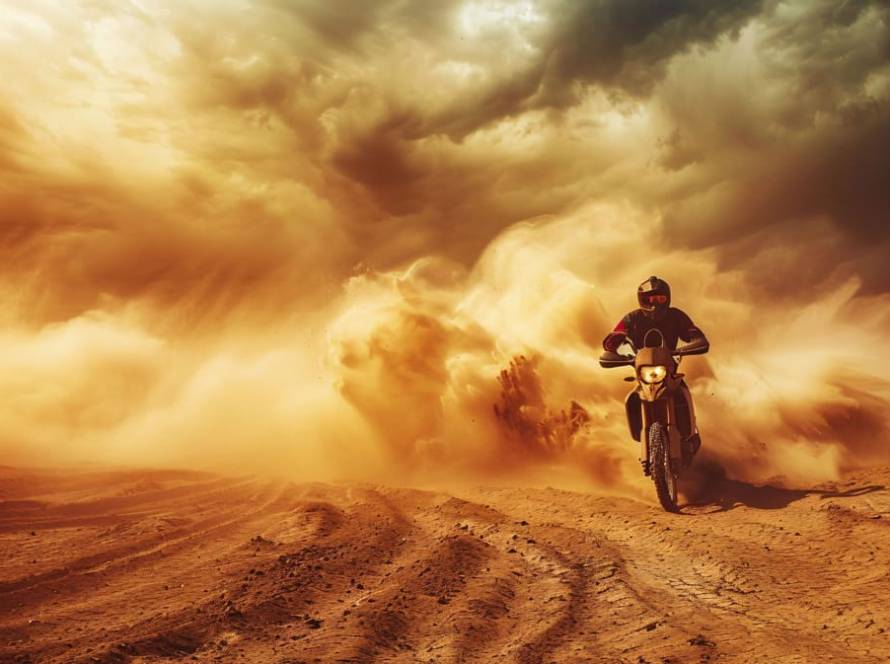
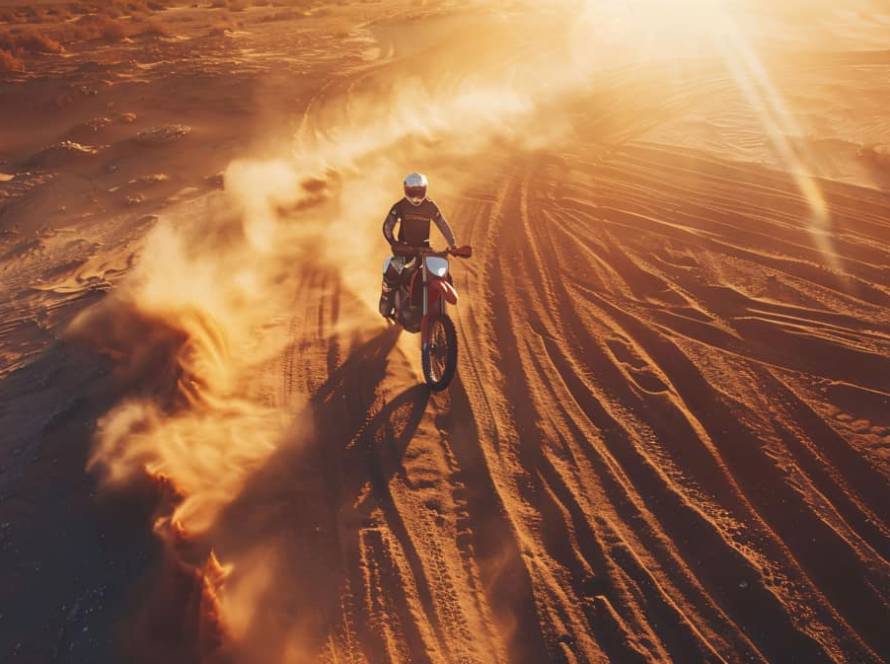
Dubai has long been known as a luxury destination, but in recent years, it has transformed into a global hub for family-friendly “Desert Thrills.” While a traditional camel ride or a slow-paced jeep safari is still popular, an increasing number of visiting families are looking for something more hands-on. They want to feel the wind, hear the engines, and see their children conquer the golden dunes themselves.
This shift toward active adventure leads many parents to a common dilemma: Can a 12-year-old really handle a dirt bike? As you watch the bikes zoom across the horizon, it is natural to feel a mix of excitement and hesitation. You want your child to have that ultimate “cool factor” story to tell their friends back home, but your priority will always be their safety and well-being.
The good news is that the Dubai desert is one of the most forgiving environments in the world to learn off-road riding. Balancing the thrill of a vacation with responsible parenting doesn’t have to be a struggle. By understanding the right equipment and training, you can turn a potential worry into a landmark childhood experience that builds confidence and creates lasting family bonds.
The Verdict: Is 12 Too Young for a Dirt Bike?
Yes, a 12-year-old can absolutely have and ride a dirt bike. In the world of off-roading, 12 is often considered the “sweet spot” for beginners. At this age, most children have developed the physical coordination, strength, and attention span necessary to handle a motor vehicle safely under professional supervision.
While it is not too young, success depends entirely on using the correct bike size and safety measures. A 12-year-old should never be placed on a full-sized adult bike; instead, they require a youth-specific model, typically ranging from 110cc to 125cc. When paired with high-quality safety gear and a controlled environment like the open, soft sands of the Dubai desert—riding becomes a constructive way to teach responsibility and motor skills. As long as the equipment fits the rider and a professional guide is present, 12 is a perfect age to start.
Choosing the Right Bike Size for a 12-Year-Old
Selecting the correct bike is the most critical step in ensuring your child has a safe and successful introduction to the desert. In the dirt biking world, bikes aren’t just categorized by age, but by engine displacement (measured in “cc”) and physical frame size.
The “Small Bore” Category
For a 12-year-old beginner, the standard recommendation falls within the 85cc to 125cc range. These are often referred to as “small bore” or “youth” bikes.
-
110cc to 125cc (4-stroke): These are the ideal “trail” bikes. They offer a mellow, predictable power that doesn’t overwhelm a new rider.
-
85cc (2-stroke): While the engine is smaller, these are often high-performance racing machines. They are very fast and “snappy,” so they are generally reserved for kids who already have some racing experience.
For a first-timer in the Dubai sand, a 125cc 4-stroke is almost always the perfect choice.
Seat Height Matters
In the desert, the sand is soft and the ground is rarely flat. Because of this, seat height is actually more important than engine power. Your child needs to be able to sit on the bike and touch the ground with the balls of both feet simultaneously. If the bike is too tall, they will lose confidence every time they have to stop.
Most youth bikes in the 125cc class have a seat height between 30 and 31 inches. When they put on their stiff riding boots, they gain about an inch of height, which usually provides the perfect “planted” feel they need to balance on a dune.
Automatic vs. Manual: The Clutch Debate
One of the biggest questions parents ask is whether their child should learn to use a clutch immediately.
-
Semi-Automatic: Many 110cc bikes are “semi-auto,” meaning the child shifts gears with their foot but doesn’t have to use a hand clutch. This is great for letting them focus on steering and balance.
-
Manual: A 125cc bike usually has a full manual clutch. While this adds a layer of complexity, 12-year-olds are typically quick learners.
If your child is a fast learner, starting with a manual 125cc is better for the long run, as it teaches them the fundamental skills they will need for any future motorcycle. However, if they are feeling nervous, a semi-auto 110cc is a fantastic, stress-free way to enjoy the desert scenery.
2-Stroke vs. 4-Stroke for Young Riders
When choosing a bike for a child, the “engine stroke” is about more than just mechanics; it defines how the bike will behave when they twist the throttle. In the soft, unpredictable terrain of the Dubai desert, this choice can significantly impact how quickly a 12-year-old builds confidence.
The 4-Stroke Advantage
For the vast majority of 12-year-old beginners, a 4-stroke engine (like a 110cc or 125cc) is the safest and most logical entry point. These engines are designed to produce “linear” power, meaning the acceleration is smooth, predictable, and steady.
In the sand, traction is everything. A 4-stroke engine “chugs” through the dunes, helping the tires grip the soft surface without spinning out of control. This stability allows a young rider to focus on their balance and steering rather than worrying about the bike suddenly “jumping” forward. Because the power is so manageable, it creates a stress-free environment where they can learn the fundamentals of desert riding at their own pace.
The 2-Stroke Challenge
You might see smaller, high-pitched bikes like the 85cc 2-stroke zipping around the dunes, but these are typically “racing” machines. While they are lighter and very fast, they have a “peaky” power delivery. This means the bike has a sudden surge of power often called the “hit”—at a certain point in the acceleration.
For an inexperienced tourist, this “all-or-nothing” power can be dangerous. A 12-year-old might twist the throttle just a little too far to get up a hill, only for the bike to suddenly take off like a rocket. This can lead to wheel-spinning, digging into the sand, or even the front wheel lifting off the ground. While 2-strokes are incredibly fun for seasoned young racers, they usually present a much steeper and riskier learning curve for a beginner on vacation.
Desert Safety Standards in Dubai
When it comes to children and motorsports, safety is not just a priority it is the entire foundation of the experience. In the Dubai desert, professional tour operators follow strict standards to ensure that a 12-year-old’s adventure is both thrilling and secure. This involves a combination of high-grade equipment, climate management, and adherence to local regulations.
Mandatory Safety Gear: More Than Just a Helmet
You should never settle for “basic” gear when your child is heading into the dunes. Professional operators provide specialized, rental-quality safety gear designed specifically for off-road impacts.
-
Helmets: These are full-face motocross helmets, which offer chin protection and superior ventilation compared to standard road helmets.
-
Chest Protectors & Body Armor: This “roost deflector” shields the torso from flying sand and debris, and provides vital cushioning for the chest and back.
-
Motocross Boots: Unlike sneakers or hiking boots, these are tall, rigid boots that lock the ankle in place, preventing twists and protecting the lower legs from the heat of the engine.
-
Goggles and Gloves: Essential for maintaining clear vision in the blowing sand and ensuring a non-slip grip on the handlebars.
Environmental Factors: Beating the Heat
The Arabian sun is a powerful force, and children can become dehydrated much faster than adults. A reputable tour will always emphasize hydration management. Guides typically carry extra water and schedule frequent “shade breaks” behind large dunes to let the bikes and the riders cool down. It is highly recommended to book “Early Morning” sessions for 12-year-olds, as the sand is cooler and the physical strain of the heat is significantly lower.
Legal Requirements and Age Regulations
In Dubai, the regulations for off-road riding are designed to keep tourists safe. While the legal age to operate a high-powered motorcycle on public roads is 18, private off-road desert tours operate under different guidelines.
-
Most professional dirt bike schools allow children as young as 12 to ride youth-sized bikes (85cc–125cc) within controlled, guided environments.
-
Parental Consent: A parent or legal guardian must be present to sign a waiver and, in most cases, must stay on-site during the duration of the lesson or tour.
-
Professional Supervision: For riders under 16, a 1-on-1 or small group guided session is usually mandatory. This ensures a professional is always within arm’s reach to assist the young rider.
Training: The First 30 Minutes
The first half-hour of a desert ride is the most important period for any 12-year-old. It is during these minutes that they transition from being a passenger to being a pilot. To ensure this transition is smooth, we follow a specific training structure designed for young learners.
The Value of a Professional Guide
Many parents are tempted to teach their children themselves, but there is immense value in having a professional guide take the lead. Children often respond better to a neutral instructor, which reduces the “family friction” that can occur during high-stakes learning. A professional guide uses proven terminology and knows exactly when to push a student and when to let them rest. This allows you, the parent, to simply be the “cheerleader,” capturing photos and celebrating their progress without the stress of being the teacher.
Essential Beginner Drills
Training starts on a flat, firm patch of sand where the stakes are low. The first 30 minutes focus on three core skills:
-
Throttle Control: Learning to “roll” the wrist smoothly. In the sand, jerky movements cause the bike to dig in, so we teach them to maintain a steady, “humming” engine sound.
-
Braking on Slopes: We practice stopping on small inclines. The goal is to use both the front and rear brakes evenly so the bike stays stable rather than sliding.
-
Standing Up: This is the “golden rule” of desert riding. We teach 12-year-olds to stand on the pegs with their knees slightly bent. This turns their legs into shock absorbers and makes the bike feel much lighter under them.
Building Confidence Through Small Wins
We avoid taking kids straight into the “big dunes.” Instead, we focus on small wins—like completing a figure-eight or successfully restarting the bike after a stall. These “micro-successes” prevent a child from feeling overwhelmed. By the end of the first 30 minutes, most 12-year-olds are no longer thinking about the controls; they are looking ahead at the horizon, ready to follow their guide into the open desert.
Why Dubai is the Perfect Place to Start
If you are looking for the ideal classroom for a young rider, you couldn’t choose a better environment than the Dubai desert. Unlike forest trails or mountain paths that are filled with hard rocks, tree roots, and mud, the desert offers a unique safety net: soft sand.
Forgiving Terrain
For a 12-year-old beginner, the fear of falling is often the biggest hurdle. In Dubai’s dunes, the sand acts as a natural cushion. If a child loses their balance and tips over at a slow speed, they aren’t landing on asphalt or hard-packed dirt; they are landing in soft, fine sand. This “soft landing” factor significantly reduces the risk of minor scrapes and bruises, allowing them to hop back on the bike with a smile rather than a tear.
World-Class Infrastructure
Dubai is home to some of the most professional off-road infrastructures in the world. The tour operators here use the latest bike models and maintain them to the highest mechanical standards. Because the region is a global tourism hub, the guides are not just skilled riders; they are trained educators who speak multiple languages and understand how to manage international groups. You aren’t just renting a bike; you are accessing a refined system of safety and support.
A Landmark Childhood Memory
There is something deeply empowering about a child successfully navigating a vast, ancient landscape under their own power. Conquering a dune in the Arabian Desert is a “core memory” that stays with a child forever. It builds a sense of independence and resilience that they will carry back to school and their daily lives. It’s more than just a ride; it’s a milestone achievement in one of the world’s most beautiful settings.
Conclusion: Booking the Family Experience
Taking your child into the desert is more than just a vacation activity; it is an investment in their confidence. It’s natural to feel protective, but we’ve seen thousands of 12-year-olds transform into capable riders in just a single afternoon. With professional-grade safety gear, a bike that fits them perfectly, and a patient guide by their side, dirt biking is a safe, structured, and deeply rewarding sport.
Don’t let your Dubai trip pass by with just a standard sightseeing tour. Give your family a story they will be telling for decades. The desert is waiting, and there is no better way to see it than from the seat of a bike.
Ready to start your family’s desert journey? Book a private session today and watch your child conquer the dunes!
Frequently Asked Questions
Q: What is the best dirt bike for a 12-year-old beginner?
A: For a first-timer in the sand, we almost always recommend a 125cc 4-stroke trail bike. It offers the perfect balance of manageable power and a seat height that allows most 12-year-olds to touch the ground comfortably. It’s powerful enough to climb dunes but smooth enough not to be intimidating.
Q: How fast does a 125cc dirt bike go?
A: On flat, hard-packed ground, a 125cc 4-stroke can reach speeds between 50 and 60 mph. However, in the soft desert sand, speeds are much lower. A beginner will typically travel at a controlled pace of 15 to 25 mph, which feels plenty fast when you’re navigating the rolling curves of a sand dune!
Q: Do 12-year-olds need a license to ride in the desert?
A: No, a driver’s license is not required for off-road riding on private desert tours in Dubai. Because these sessions take place in designated off-road areas under professional supervision, children can legally operate youth-sized dirt bikes. We handle all the permits; you just need to bring their sense of adventure.
Q: Is it safe for a child to ride in the high dunes?
A: Safety is entirely dependent on the terrain selection. We don’t take beginners into “razorback” dunes or steep drops. For 12-year-olds, we stick to the “rolling dunes,” which provide the thrill of the desert without the high-risk angles. With the right gear and a guide leading the way, it is a very controlled and safe environment.