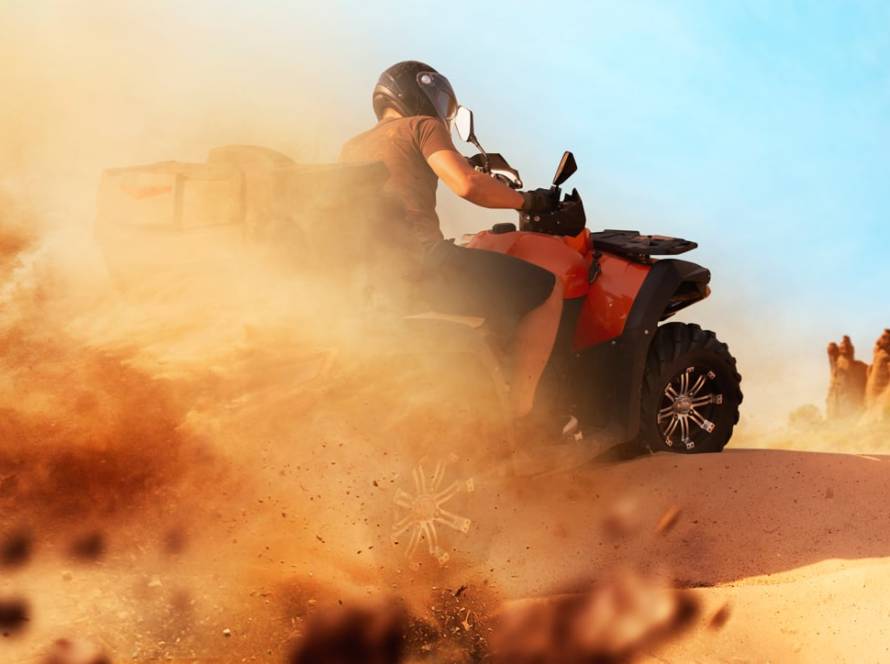
Imagine standing at the edge of the vast, golden Arabian Desert. The sun is warm, the horizon is endless, and right in front of you sits a powerful all-terrain vehicle (ATV) ready to roar. For most travelers visiting Dubai, the first question that pops into their mind isn’t just about the view it’s about the adrenaline. You want to know: How fast can I actually go?
The idea of an off-road adventure across shifting dunes is incredibly exciting, but driving on sand is a world away from driving on a paved road. While these machines are built for speed and power, the desert itself acts as a natural speed regulator. Between the steep incline of the dunes and the soft, unpredictable nature of the sand, your “top speed” is often a balance between the bike’s mechanical limits and your own comfort level. This guide helps you understand that balance so you can enjoy the thrill of the desert while staying firmly in control.
What is the Top Speed of a Quad Bike in Dubai?
Most quad bikes used for desert tours in Dubai reach top speeds between 40 km/h and 80 km/h (25 to 50 mph). While professional-grade sports models can technically exceed 120 km/h (75 mph), your actual speed is usually limited by the soft, shifting sand and the safety of the terrain.
The speed you’ll experience depends mostly on the machine’s engine size:
-
Kids’ Bikes (90cc): Limited to around 25–30 km/h for safety.
-
Standard Adult Bikes (250cc–400cc): Typically hit 50–70 km/h.
-
High-Performance Quads (450cc–700cc): Can reach 80+ km/h in open desert stretches.
What Are the Different Quad Bike Classes and Which One Is Right for You?
Beginner? Go with a 250cc automatic no gears, no stress. Experienced rider? A 450cc–700cc manual bike gives you the power and control to tackle serious dunes.
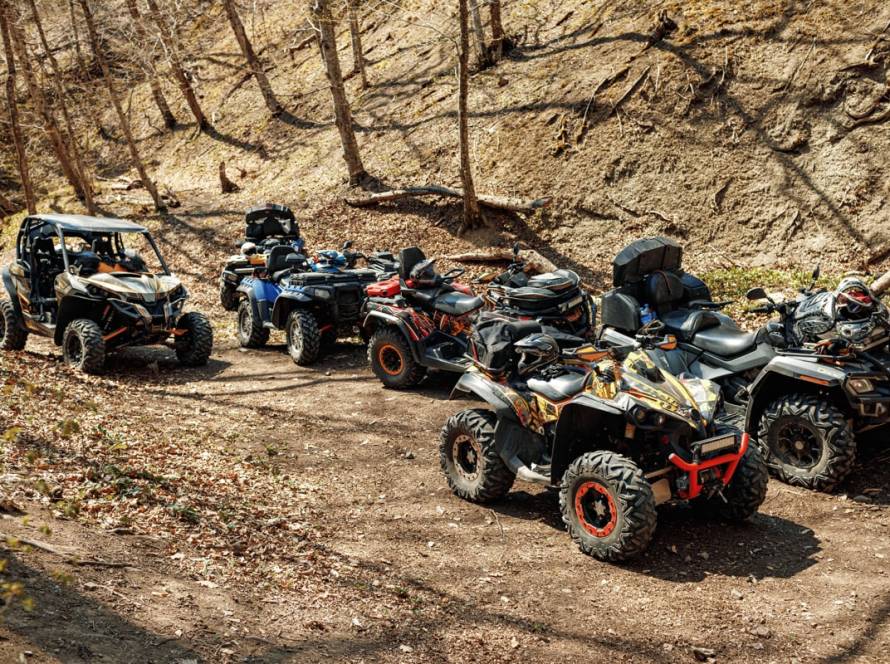
When you arrive at a desert camp, the first thing you’ll notice is that not all quad bikes look or sound the same. That’s because they’re built for different riders. Picking the right one makes the difference between a thrilling ride and a stressful one.
Is a 250cc Quad Bike Good Enough for a Desert Ride?
If it’s your first time, or you just want to enjoy the scenery without too much pressure yes, absolutely. Entry-level 250cc bikes are fully automatic, meaning you twist the throttle and go. No gear-shifting, no clutch to worry about while you’re already trying to steer over a sand dune. They’re steady, manageable, and powerful enough to climb most dunes at a comfortable pace without the front wheels lifting off unexpectedly. Think of it as the “just drive and enjoy” option.
When Should You Choose a 450cc–700cc Performance Bike?
If you’ve ridden before and want real adrenaline, this is your category. Models like the Yamaha Raptor run on manual transmission meaning you control a clutch and shift gears yourself. That extra control lets you downshift for more torque on steep climbs, or open it up completely across flat desert stretches. The power difference is immediately noticeable. These bikes aren’t for nervous riders, but for anyone with experience, that raw “punch” is exactly what makes the Dubai dunes worth it.
Factors That Influence Your Speed in the Sand
If you’ve only ever driven on paved roads, the desert will surprise you. Your speed isn’t just about how hard you press the throttle; it’s about how the environment reacts to your bike. The most significant factor is sand density. In the early morning, the sand is often cooler and firmer, allowing your tires to grip and glide. As the sun gets higher, the sand becomes soft and “powdery,” which can make the bike feel like it’s working twice as hard just to maintain a steady pace.
Then there is the dune topography. When you’re facing the steep slope gradients of famous spots like the “Big Red” dunes, your speed will naturally drop as the engine uses all its torque to pull you upward. On the flip side, flat desert plains allow you to open up the throttle and feel the true top-end speed of the machine.
You might also notice the tires look a bit flat this is intentional. We use low tire pressure to create a wider “footprint” on the sand. This technical necessity prevents you from digging a hole and getting stuck, but the extra friction means you won’t hit the same speeds you would on hard ground. Lastly, keep in mind the payload. A quad bike carrying two people or a heavier rider requires more power to overcome the sand’s resistance, which can slightly temper your acceleration compared to a solo rider on a light bike.
How Does Dubai Keep Quad Biking Safe in the Open Desert?
There are no speed signs in the sand, but professional operators follow strict safety systems guided convoys, pre-scouted routes, and mandatory gear to make sure every ride stays thrilling without becoming dangerous.
The open desert can feel boundless and free, and that’s part of the appeal. But safety is taken seriously here, even when it doesn’t look like it on the surface.
Why Do Tours Use a Convoy System?
Most quad biking tours move in a group, with an experienced lead guide setting the pace at the front. This isn’t about slowing you down it’s about keeping you safe in terrain that constantly changes. The desert hides real hazards: sudden drop-offs, pockets of ultra-soft sand, and uneven slopes that can catch you completely off guard at high speed. Your guide has already scouted the route and knows exactly where it’s safe to push it and where it isn’t. Following their tracks means you’re riding in pre-cleared zones, not gambling with what’s just over the next dune.
What’s the Difference Between a Fenced Circuit and Open Desert?
Most operators offer both, and the distinction matters depending on your experience level. Fenced circuits are controlled, lower-speed areas ideal for first-timers, kids, or anyone who wants to get comfortable with the bike before heading out into the open. Open desert zones give experienced riders more freedom to genuinely test the bike’s power across wider, more varied terrain.
Is Safety Gear Actually Mandatory?
Yes ,and for good reason. A high-quality helmet and goggles are non-negotiable on every ride, regardless of your skill level. At speed, even a small amount of wind-blown sand hits hard enough to sting your eyes and blur your vision in seconds. Proper gear means you can stay fully focused on the ride instead of constantly squinting or flinching. No reputable operator will let you out on the dunes without it.
Pro Tips: How to Safely Maximize Your Speed
If you want to feel that extra rush of speed without losing control, it all starts with your technique. The most important skill is body positioning. When you’re accelerating or taking a turn, lean your weight into the direction of the movement. If you’re heading up a steep dune, lean forward to keep the bike’s nose down; on the way down, shift your weight back to stay stable.
Another secret is reading the sand. Look for “hard-packed” areas these often look slightly darker or have subtle ripples. This sand is more compressed, providing the traction you need to pick up the pace safely. Timing also plays a huge role. If speed is your goal, try to book a morning session. The overnight drop in temperature makes the sand much firmer and “faster” compared to the late afternoon, when the intense Dubai sun turns the dunes into soft, energy-absorbing powder that can slow you down.
Speed vs. Experience
At the end of the day, the “fastest” speed is just one small part of the adventure. While hitting a high-speed stretch across the desert floor is an incredible rush, the real magic lies in the moments in between reaching the peak of a massive dune to see the sunset or mastering the technical skill of carving through soft sand. It’s about the freedom of the open horizon and the unique challenge that only the Arabian Desert can offer. Ready to feel the engine roar? Make sure to book your journey with a certified operator who balances heart-pounding adrenaline with world-class safety standards for the ultimate Dubai experience.
Frequently Asked Questions (FAQ)
Q: Do I need a driving license to ride a quad bike in Dubai?
A: No, you do not need a special driver’s license to enjoy quad biking in the desert. Because these adventures take place in designated off-road areas rather than on public highways, your excitement and a quick safety briefing are all you need to get started.
Q: Is it safe for beginners who have never ridden before?
A: Absolutely! Most desert tours are designed with beginners in mind. You’ll be given an automatic “gas-and-go” bike that is very easy to handle, and a professional guide will lead the way to ensure you stay on safe, pre-scouted paths.
Q: What is the minimum age for quad biking?
A: For solo riding on adult-sized bikes, the minimum age is typically 16 years old. However, many desert camps offer smaller, kid-friendly 90cc quads for children as young as 6 to 12 years old, usually within a safe, fenced-in circuit.
Q: What should I wear for a desert quad bike tour?
A: Comfort is key! Wear breathable, lightweight clothing and closed-toe shoes (avoid sandals or flip-flops as they can slip). We also highly recommend sunglasses and a scarf to protect your face from the sun and wind-blown sand.
Q: Can I go “full speed” whenever I want?
A: While it’s tempting to push the limit, it’s best to save high speeds for flat, open stretches of sand. On the dunes, your speed should be managed and steady. Following your guide’s pace ensures you don’t encounter a hidden drop-off or “soft spot” too quickly, keeping the ride both thrilling and safe.