When you picture a family holiday in Dubai, you likely imagine the glittering Burj Khalifa or the massive malls. However, for many parents, there is a nagging worry: “Are we missing out on the real desert action because we have the kids with us?” You don’t want to be stuck in a slow-moving shuttle while other travelers are conquering the golden dunes. You want the wind in your face and that shared family adrenaline rush, but safety is naturally your top priority.
Can kids join a dune buggy ride in Dubai as passengers? Yes, children can join a dune buggy ride as passengers, provided they are usually at least 5 to 6 years old and meet specific height requirements. While age limits vary slightly between tour operators, most professional desert guides welcome young adventurers in multi-seater buggies equipped with proper safety harnesses.
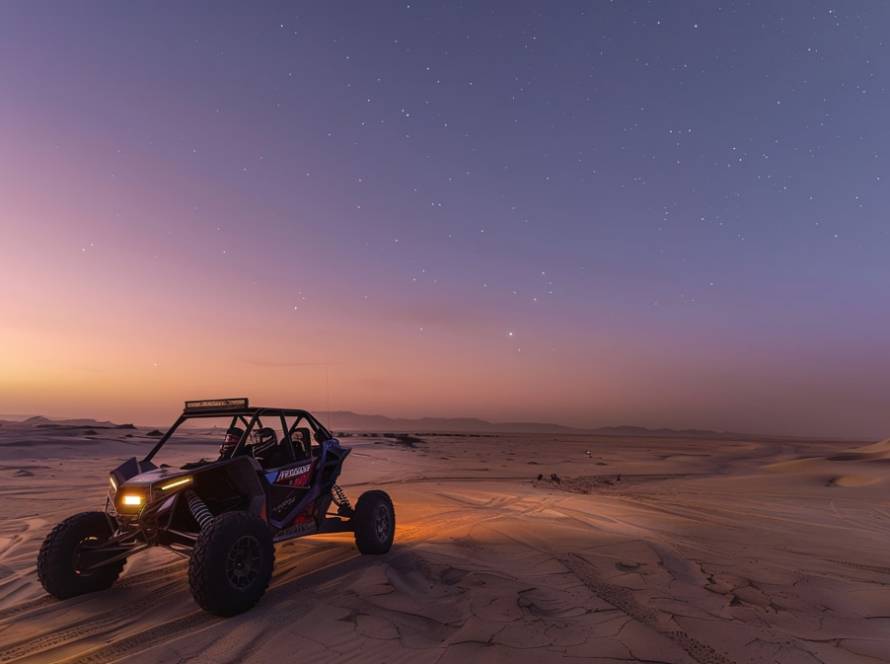
Unlike a standard SUV safari, where you sit inside a closed cabin, a dune buggy is an open-air, high-performance vehicle built specifically for sand. It offers a more raw, thrilling connection to the desert landscape while providing a much more stable and controlled ride than a quad bike.
The Golden Rule: Minimum Age and Height Requirements
When planning your desert trip, it is important to distinguish between the person behind the wheel and those coming along for the ride. To drive a dune buggy in Dubai, the industry standard is typically 16 to 18 years old. This age requirement ensures the driver has the physical strength and coordination to navigate shifting sands and steep inclines. However, the rules for passengers are much more flexible, allowing younger thrill-seekers to join in on the fun.
Most reputable tour operators in Dubai allow children to ride as passengers starting from 5 to 6 years old. Beyond just age, height is a crucial factor. For a child to ride safely, they generally need to be at least 110cm to 120cm tall. This is not an arbitrary number; it ensures that the safety harness and seatbelt fit securely across their chest and lap rather than resting dangerously near their neck.
While the desert may feel like a place without boundaries, safety is heavily regulated. Professional companies strictly follow guidelines set by the Dubai Road and Transport Authority (RTA). You might find smaller, unlicensed operators who are willing to “look the other way” regarding age or height limits, but this is a significant risk. Licensed operators prioritize your family’s safety by adhering to these standards, ensuring that every passenger is properly secured in a vehicle designed to handle the rugged terrain.
Safety First: Why Age Restrictions Exist
Navigating the massive dunes of Dubai is an exhilarating experience, but it is also a physically demanding activity. When a buggy traverses the “peaks and valleys” of the desert, the body experiences significant movement. Sudden turns, steep drops, and the occasional bump create G-forces that require a passenger to have a certain level of physical maturity. A child must be old enough to hold onto the safety bars and have the core strength to stay upright and stable as the vehicle moves over uneven terrain.
A major factor in these age limits is the design of the safety equipment. Professional dune buggies are fitted with 4-point or 5-point safety harnesses, which are far more advanced than a standard car seatbelt. These harnesses wrap over both shoulders and across the hips to keep the passenger locked safely into the seat bucket. If a child is too small, the straps will not sit correctly on their shoulders, rendering the harness ineffective during a sharp maneuver. Ensuring your child meets the height and age requirements means the safety gear can do its job correctly.
Furthermore, there is a distinct safety advantage to choosing a dune buggy over a quad bike for your children. Buggies are designed with a reinforced steel roll cage that surrounds the entire seating area. In the rare event of a tip-over, the cage acts as a protective shield. Unlike quad bikes, where the rider is exposed and must use their body weight to balance the machine, buggies offer a low center of gravity and a protective frame. This structural safety makes the dune buggy the gold standard for families who want to experience the desert’s beauty without compromising on security. Using these specialized vehicles ensures that the thrills remain fun and, most importantly, safe for every member of the family.
Choosing the Right Vehicle: 2-Seater vs. 4-Seater Buggies
When booking your desert excursion, the type of vehicle you choose is just as important as the destination. For families, the choice usually comes down to a 2-seater or a 4-seater buggy. If you are traveling as a couple with one child, a 2-seater might seem tempting, but for most families, the 4-seater models—such as the Can-Am Maverick or the Polaris RZR—are the superior choice.
The primary benefit of a 4-seater is the logistics. It allows the whole family to stay together in a single vehicle, creating a shared experience. Parents can sit in the front while up to two children sit securely in the back, or one parent can sit in the rear with a child to provide extra reassurance during the ride. Being in the same “pod” makes it much easier to communicate, check on your child’s comfort level, and share the excitement as you crest a large dune.
Beyond the social aspect, 4-seater buggies offer a mechanical advantage: stability. These vehicles typically have a longer wheelbase and a wider track compared to their 2-seater counterparts. This design creates a larger footprint on the sand, which significantly reduces the risk of the vehicle tipping during sharp turns or on steep side-slopes. For parents concerned about safety, these “wide-track” buggies provide a smoother, more planted feel. They are engineered to absorb the desert’s bumps more effectively, ensuring that the ride is thrilling for the adults but stable enough for the younger passengers in the back. Selecting a high-quality 4-seater ensures you don’t have to choose between adrenaline and peace of mind.
Essential Tips for Parents: Preparing Your Child
Preparation is the secret to a successful family desert trip. The first thing to consider is timing. While sunset tours are popular for photography, morning tours are often much better for children. The temperatures are significantly cooler, and the sand is firmer, which often results in a smoother ride. Perhaps more importantly, children are usually at their highest energy levels in the morning. A tired child is more likely to feel overwhelmed by the noise and movement of the buggy, so booking an early session helps keep the experience positive.
Health and hydration are equally vital. The desert heat can be deceptive, especially with the wind blowing through an open buggy. Ensure your child drinks plenty of water before the trip begins and keep a bottle handy during breaks. If your child is prone to motion sickness in a car, the desert dunes will certainly trigger it. Consider a light snack instead of a heavy meal before heading out, and consult your doctor about age-appropriate motion sickness remedies if needed.
When it comes to what to wear, think about protection and comfort. Loose, breathable cotton clothing is best to keep cool, but avoid sandals. Closed-toe shoes or sneakers are essential to keep hot sand out and provide a better grip. Most operators provide helmets, but you should also ensure your child has well-fitting goggles or sunglasses to protect their eyes from flying sand.
Finally, establish a communication system. The engines are loud, and the wind makes it hard to hear. Before you start, teach your child a simple “stop” hand signal—like a raised fist or a thumbs-down. Reassure them that if they feel scared or sick, they can use the signal, and you will ask the guide to slow down or take a break. Knowing they have a way to control the situation makes children feel much more secure and adventurous.
Comparing Options: Dune Buggies vs. Quad Bikes for Kids
When choosing a desert vehicle for your family, safety and comfort are the top priorities. While both options offer excitement, dune buggies are better choice for children. Buggies are built with a reinforced steel roll cage and secure seatbelts, providing a protective “bubble” that quad bikes simply do not have. Furthermore, buggies have a much wider wheelbase and a lower center of gravity, making them incredibly stable and resistant to tipping, even when navigating steep dunes.
In contrast, quad bikes require the rider to use their own body weight to maintain balance and steer. This “active” style of riding is much harder for kids to manage as passengers, especially on soft sand. Because quad bikes lack a protective frame and harnesses, they carry a higher risk if the vehicle becomes unstable.
Due to these differences, age limits for quad bikes are often much stricter. While many operators allow children as young as 5 to ride in a buggy, they may require a child to be at least 8 to 12 years old to ride as a passenger on a quad bike. For the safest and most relaxed family experience, the dune buggy remains the gold standard for desert exploration with little ones.
What to Look for in a Tour Operator
Choosing a reputable tour operator is the most important decision you will make for your family’s desert adventure. In Dubai, the desert is a regulated environment, and high-quality companies go above and beyond to ensure their guests are protected. When you are browsing websites or talking to booking agents, use this checklist to ensure you are choosing a trustworthy partner.
First, verify that the operator holds a valid license from the Dubai Department of Economy and Tourism (DET) and the Road and Transport Authority (RTA). Licensed companies are required to have their vehicles inspected regularly and their drivers professionally certified. Furthermore, ensure the company provides comprehensive insurance that specifically covers off-road desert activities for all passengers, including children.
Safety equipment is another non-negotiable factor. A professional operator will provide high-quality, sanitized helmets and goggles. Most importantly, they should have child-sized safety gear available. A helmet that is too large will not protect a child’s head in the event of a bump. Additionally, ask if their guides are trained in First Aid and if the vehicles are equipped with emergency kits and fire extinguishers.
Finally, be wary of “budget” operators. A major red flag is any company that skips the mandatory safety briefing or fails to check the height and age of child passengers. If an operator seems more interested in a quick booking than in explaining their safety protocols, it is best to look elsewhere. High-quality operators take the time to ensure every family member feels confident and secure before the engines even start.
Alternative Desert Activities for Younger Children
If your child is under the age of five or simply isn’t ready for the roar of a buggy engine, the Dubai desert still offers plenty of magic. You don’t have to skip the dunes entirely; instead, look for more inclusive, gentle activities. Camel rides are a classic choice, offering a slower pace that allows little ones to enjoy the view from a safe height. Many desert camps also feature falconry displays, where children can watch these magnificent birds up close in a calm, educational environment. For a bit of active fun, sandboarding on small, gentle slopes is a great way for kids to play in the sand without the high speeds of a motorized vehicle.
Another excellent option is the ” Safari” concept. By booking a private tour, you gain full control over the pace. You can ask your driver to avoid aggressive “dune bashing” and instead take a scenic route. This allows you to enjoy the stunning landscape and wildlife at a speed that keeps your youngest travelers comfortable and smiling.
Conclusion: Making Memories Safely
Exploring the Arabian dunes is a rite of passage for any traveler, and having your children along for the ride only makes the experience more special. The final verdict is clear: as long as you choose a reputable operator and follow age-appropriate safety precautions, a dune buggy adventure is one of the safest and most exciting highlights of a Dubai family vacation. By prioritizing the right vehicle and professional guidance, you ensure that your trip is defined by smiles and spectacular photos rather than safety concerns.
Ready to take the plunge? Contact a safety-certified desert tour provider today to book your family-friendly buggy experience.
Frequently Asked Questions
Q: Can my 4-year-old join the ride if I hold them on my lap?
A: No. For safety reasons, every passenger must have their own dedicated seat and be secured by a professional 4-point or 5-point harness. Holding a child on your lap is extremely dangerous during off-road driving because the harness cannot protect either of you effectively. Most reputable operators require children to be at least 5 or 6 years old to ensure they fit the safety equipment properly.
Q: Do I need to bring a special helmet for my child?
A: You do not need to bring your own. Professional tour operators provide sanitized, high-quality helmets and goggles as part of the package. When booking, it is a good idea to confirm that the company has “youth” or “child-sized” helmets available, as a helmet that is too loose will not provide the necessary protection.
Q: Is the ride too bumpy for children who get motion sickness?
A: The desert terrain involves constant movement, which can trigger motion sickness. However, buggies are generally smoother than quad bikes. To help your child, book a morning tour when the sand is firmer, avoid a heavy meal right before the ride, and ask your guide for a “scenic” pace rather than high-intensity dune bashing.
Q: What is the best time of year for a family buggy tour?
A: The best time to visit the desert with kids is during Dubai’s cooler months, from October to April. During this window, the weather is pleasant and the heat is manageable. If you are visiting during the summer, it is essential to book the earliest possible morning slot to avoid the intense midday sun.
Q: Are 4-seater buggies safer than 2-seater buggies for families?
A: While both are built with safety cages, 4-seater buggies are often preferred by families because of their stability. They have a longer and wider base, which provides a more “planted” feel on the sand. Additionally, they allow parents to sit directly next to or in front of their children, making it easier to monitor them throughout the journey.