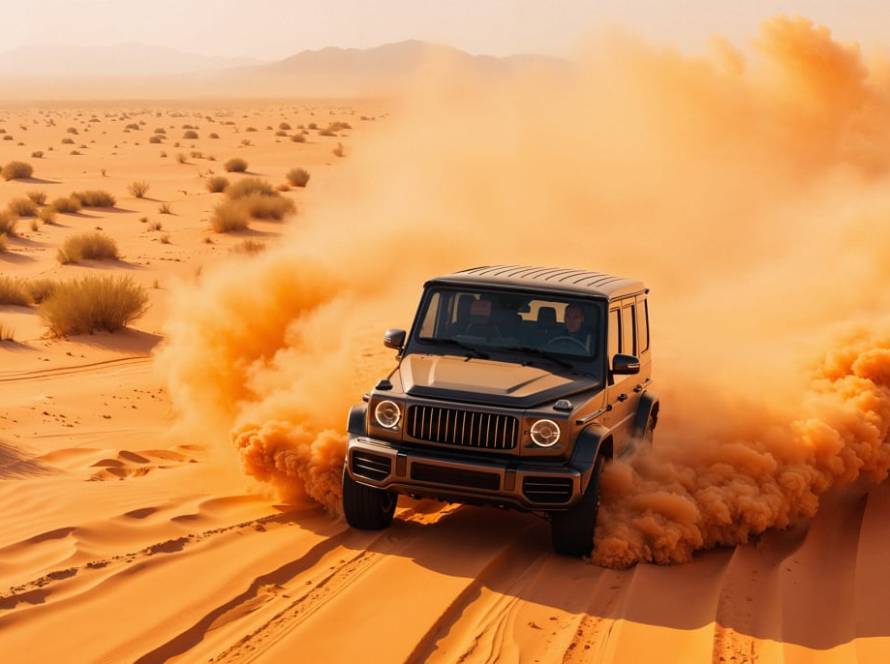
Rising like a sea of frozen fire along the Dubai-Hatta Road, Al Badayer is the crown jewel of the Arabian desert. Known affectionately by locals and off-road enthusiasts as “Big Red,” this area is much more than just a stretch of sand it is Sharjah’s adventure hub. While many desert spots offer flat plains and scrubland, Al Badayer is famous for its massive, deep-orange dunes that provide the perfect canvas for high-intensity dune bashing.
Positioned right on the border of Dubai and Sharjah, Al Badayer serves as the true “Gateway to the Desert.” It offers a distinct topographical shift from the golden sands of Dubai to a deep, iron-oxide red. This unique terrain isn’t just for show; the steep inclines and razor-sharp ridges are why seasoned thrill-seekers often bypass the smaller dunes of Lahbab to test their skills here. Whether you are watching the sunset paint the peaks or feeling the rush of a 4×4 climbing a 300-foot slope, the experience here is raw, powerful, and unforgettable.
Why Al Badayer? Comparing the “Big Red” to Other Deserts
When planning a desert trip, it is easy to assume all sand is created equal. However, experienced off-road enthusiasts know that the specific geology of a region completely changes the adventure. Al Badayer stands out because of its red dunes, which contain a higher iron-oxide content than the pale sands found closer to the coast. This gives the sand a heavier, grippier consistency, allowing for steeper climbs and more dramatic “roostertails” of sand behind a 4×4.
While Al Awir is the most convenient choice for those staying in downtown Dubai, its dunes are relatively low and the area is often crowded with large tour buses. Lahbab (often called the Red Dunes of Dubai) offers a step up in height and color, but it still lacks the sheer scale of Al Badayer’s “Big Red.” At Al Badayer, the dunes aren’t just hills; they are massive structures that require genuine skill to navigate.
Just a short drive away, you’ll also find Fossil Rock. This area offers a stark contrast, where jagged limestone formations rise out of the shifting sands, holding the remains of ancient marine life. For those who want a mix of high-speed thrills and natural history, the Al Badayer region provides a variety that other desert spots simply can’t match.
The following table breaks down the key differences to help you choose the right destination for your skill level and interest:
Desert Comparison Guide
| Feature | Al Badayer (Big Red) | Lahbab | Al Awir |
| Distance from Dubai | ~50-60 Minutes | ~45 Minutes | ~30 Minutes |
| Dune Height | Very High (300ft+) | Medium to High | Low to Medium |
| Sand Color | Deep Crimson/Red | Bright Orange/Red | Light Golden/Yellow |
| Crowd Levels | Moderate (mostly pros) | High (tourist groups) | Very High (heavy traffic) |
| Best For | Adrenaline & Off-roading | Photography & BBQ | Quick City Escapes |
Choosing Your Adventure: Safari Package Types
Finding the right way to explore Al Badayer depends on your schedule and what you want to get out of the desert. Because “Big Red” is a premier destination for both casual travelers and serious off-roaders, operators offer distinct packages tailored to different energy levels and interests.
Morning Safari (4 Hours): Best for Adrenaline and Photography
If your primary goal is to experience the raw power of the dunes without the fluff, the morning safari is your best bet. These tours typically depart early (around 7:00 AM or 8:00 AM) to beat the midday heat. The cooler temperatures make physical activities like sandboarding and quad biking much more comfortable. For photographers, the morning sun provides sharp, clear light that highlights the dramatic shadows and ridges of the crimson dunes. Since these tours skip the evening camp shows and dinner, they are perfect for those who want a high-energy “hit” of adventure and still want their afternoon free.
Evening Safari (6 Hours): The “Total Package”
The evening safari is the most popular choice for a reason—it offers a complete transition from daylight adventure to starlit relaxation. Starting in the late afternoon, you’ll begin with a pulse-pounding dune bashing session as the sun dips toward the horizon. Once the “Golden Hour” passes, you are taken to a traditional Bedouin-style camp. Here, the experience shifts to cultural immersion: you can enjoy a full BBQ buffet dinner with plenty of vegetarian and meat options, watch live Tanoura and fire shows, and try henna painting. It is a slower-paced, social experience that captures the classic spirit of Arabian hospitality.
Overnight and Luxury Retreats: Mysk Al Badayer Retreat
For those who feel a few hours isn’t enough, Al Badayer offers world-class overnight options that blend rugged desert life with 5-star comfort. The Mysk Al Badayer Retreat is the standout choice here. Designed to look like a traditional desert fort or a “caravanserai” from the Silk Road era, it offers private tents equipped with their own climate-controlled swimming pools.
Unlike a standard camping trip, this luxury retreat allows you to witness the desert’s most peaceful moments the absolute silence of midnight and the first light of a desert sunrise—without sacrificing modern amenities. Guests can enjoy fine dining at the Al Madam restaurant, take guided nocturnal “eco-walks” to spot local wildlife, or simply stargaze from the comfort of a private terrace. It is an ideal pick for couples or families looking for a deep, high-end immersion into the Sharjah desert.
High-Octane Activities: Beyond the 4×4
While the drive to Al Badayer is scenic, the real excitement begins the moment you leave the pavement. As a professional advisor in this field, I recommend looking beyond the standard jeep tour to experience the full scale of “Big Red.” Each activity requires specific gear and a “safety-first” mindset to ensure your adventure remains a positive memory.
Dune Bashing: What to Expect from a 4×4 Land Cruiser
Dune bashing is the core of any safari. You will typically be in a modified Toyota Land Cruiser or Nissan Patrol. These vehicles are chosen for their high torque and reliability in soft sand.
-
The Technical Side: Professional operators use vehicles equipped with internal roll cages and heavy-duty suspension. Drivers will deflate the tires to approximately 15 PSI to increase the surface area, allowing the car to “float” on the red sand.
-
Safety Tip: Always ensure your seatbelt is tight. If you are prone to motion sickness, it is best to sit in the front seat and avoid eating a heavy meal two hours before the trip.
Quad Biking & Dune Buggies: Taking the Wheel
For those who want to drive themselves, quads and buggies offer the most direct connection to the dunes.
-
Age and Power: For full-sized 250cc–400cc quad bikes, the minimum age for solo driving is typically 16 years. Younger riders (aged 12–15) are often restricted to smaller 90cc–150cc junior ATVs within enclosed, supervised zones.
-
Dune Buggy Advantage: Buggies (like the Polaris RZR) are generally considered safer for families because they feature roll cages, bucket seats, and 4-point harnesses. While drivers must usually be 16 to 18 years old, children as young as 6 years old can often join as passengers.
-
Essential Gear: Operators provide DOT-approved helmets and goggles. I recommend wearing long sleeves and pants to protect against sand spray and the sun.
Sandboarding: Conquering the 300ft “Big Red”
Sandboarding is the desert’s answer to snowboarding. Because Al Badayer’s dunes are exceptionally steep, the “slip face” provides enough momentum for a thrilling descent.
-
Technique: Unlike snow, sand has high friction. To stay upright, keep your knees bent and your weight centered or slightly back. If you lean too far forward, the board can dig into the sand.
-
Safety Tip: Always use a board with secure foot straps or bindings. Beginners should start on the lower half of the dune before attempting the peak.
Camel Trekking: The Bedouin Pace
To appreciate the silence of the desert a camel trek is essential. This is a low-impact activity suitable for almost all ages (typically 3 years and up).
-
Expert Advice: When the camel stands up or sits down, lean back significantly to counter the animal’s shifting center of gravity. It is the most authentic way to see the “ripples” in the red sand that high-speed vehicles often disturb.
Professional Cost Breakdown (2026 Pricing)
Understanding the financial side of a desert safari is just as important as the adventure itself. In 2026, pricing for Al Badayer remains competitive, but the total cost depends heavily on the level of service and the specific activities you choose to add. Whether you are looking for a standard group experience or a private luxury retreat, being aware of the market rates ensures you get the best value for your money.
2026 Price Comparison Guide
The following table provides an average price range for the most common packages available in the Al Badayer region.
| Package Type | Estimated Price (AED) | Best For |
| Budget / Standard | AED 150 – 250 | First-time visitors and large groups. |
| VIP / Premium | AED 250 – 450 | Couples and those wanting table service. |
| Private 4×4 Vehicle | AED 800 – 1,500 | Families or groups (up to 6 people). |
| Overnight Safari | AED 350 – 600 | Cultural immersion and stargazing. |
Popular Add-on Activities
Most base packages include dune bashing, a short camel ride, and sandboarding. However, if you want more control over your experience, you should budget for these common extras:
-
Quad Biking (30-60 Mins): AED 150 – 350 (varies by engine size/CC).
-
Dune Buggy Rental (1 Hour): AED 500 – 1,200 (for high-performance buggies).
-
Falconry Photo Opportunity: AED 20 – 50.
-
Extended Camel Trek: AED 100 – 200.
Expert Tip: Avoiding Hidden Fees
When booking, always ask if “door-to-door” hotel pickup is included or if you are expected to meet at a centralized location. A common industry tactic is to offer a very low base price (e.g., AED 99) but then charge extra for sandboarding or even for water at the camp. A Standard ticket should always include a shared buffet dinner and basic entertainment, while a VIP ticket typically adds “Majlis” seating (sofas) and table service, so you don’t have to wait in line for food.
The “Safety First” Protocol: A Consultant’s Checklist
A desert safari is a high-energy activity, and like any financial investment, it requires a clear understanding of the risks and requirements involved. To ensure your trip to Al Badayer is both thrilling and safe, follow this professional checklist before you head into the dunes.
Professional Safety Standards
When booking your tour, the quality of the equipment is your primary safeguard.
-
Licensed Desert Guides: Ensure your driver holds a specific RTA permit for off-road desert driving. These professionals are trained to “read” the sand and handle emergency situations.
-
Vehicle Specifications: All 4×4 vehicles used for dune bashing must be equipped with internal roll cages and reinforced suspension. By law, every passenger must have a working seatbelt, and the vehicle should carry a fire extinguisher and a comprehensive emergency first aid kit.
-
Dune Buggy Gear: If you are driving a buggy, never settle for just a helmet. Professional operators provide full-face helmets, goggles to block sand spray, and often chest protectors or gloves.
Medical Considerations and Age Limits
Because dune bashing involves sudden drops and high-speed turns, certain health conditions are incompatible with the ride.
-
Pregnancy and Back Issues: Expectant mothers and individuals with chronic back or neck injuries, or recent surgeries, should strictly avoid dune bashing. The jarring movements can exacerbate these conditions.
-
Heart Conditions: Those with heart ailments or high blood pressure should consult a doctor before participating in high-intensity activities.
-
Age Limits: While there is no upper age limit for those in good health, children under 3 years old are generally not permitted for dune bashing. For quad biking, the minimum age is typically 12 to 15 years for solo riding, while dune buggy drivers must be at least 16 years old.
Environmental and Personal Prep
The desert environment is unforgiving, but proper preparation makes it manageable.
-
Hydration: Drink plenty of water in the 24 hours leading up to your trip. During the safari, sip water frequently rather than drinking large amounts at once.
-
Sun Protection: Use SPF 50+ sunscreen and reapply every two hours. A wide-brimmed hat and polarized sunglasses are essential to protect against the intense glare of the red sand.
-
Motion Sickness Tips: To avoid nausea during dune bashing, sit in the front passenger seat where you can see the horizon. Keep your eyes on the path ahead rather than looking at your phone or camera. Taking a light, non-greasy meal two hours before your departure and perhaps a ginger-based snack can significantly help settle your stomach.
What to Wear & Pack for Your Desert Adventure
Choosing the right clothing is about more than just looking good for photos; it is a matter of comfort and protection. The Al Badayer desert is a high-exposure environment where the right fabrics and footwear can make or break your experience on the “Big Red” dunes.
Choosing the Right Fabrics
When it comes to the desert heat, breathability is your best friend.
-
Cotton and Linen: Natural fibers like cotton are excellent because they allow air to circulate around your skin. They are lightweight and help absorb moisture, which is vital during active sessions like sandboarding.
-
Synthetics: Avoid heavy synthetic materials or thick denim that can trap heat and lead to chafing. If you opt for athletic wear, ensure it is moisture-wicking and specifically designed for hot climates.
-
Expert Tip: Opt for light-colored clothing. Darker colors absorb more solar radiation, making you feel significantly hotter under the direct Arabian sun.
Footwear: Function Over Fashion
While flip-flops are great for the beach, they are a liability in the deep red sands of Al Badayer.
-
The Case for Closed-Toe Shoes: For activities like sandboarding and quad biking, sneakers or lightweight trekking shoes are essential. They provide the ankle support needed to navigate uneven dunes and prevent your feet from getting burned by sand that can reach high temperatures during the day.
-
Keeping Sand Out: If you do wear sandals, ensure they have secure straps. However, keep in mind that once sand gets into a shoe, it can be abrasive; many adventurers prefer socks with sneakers to create a total barrier.
The “Desert Chill” and Essentials
The desert is famous for its extreme temperature swings. As soon as the sun sets, the heat trapped by the sand dissipates rapidly.
-
Layering: If you are booking an evening or overnight safari, always pack a light jacket, a hoodie, or a pashmina shawl. A drop of 10°C (18°F) within an hour is not uncommon.
-
Must-Haves: Beyond clothes, your bag should include polarized sunglasses to combat the intense glare off the red dunes and a small “dry bag” or plastic pouch to protect your phone and camera from fine desert dust.
Timing & Seasonality: When to Visit
Timing your visit to Al Badayer is the most important factor in ensuring your desert adventure is comfortable rather than draining. Because the “Big Red” dunes are located in a high-exposure area, the weather dictates the entire flow of the day.
The Peak Season: October to March
The best time to plan your safari is during the cooler months, specifically from October to March. During this window, daytime temperatures are pleasantly mild, ranging from 18°C to 32°C (64°F to 90°F). This is the “Goldilocks” zone for desert activities; the sand is cool enough to walk on, and you can engage in physical sports like sandboarding or quad biking without the risk of heat exhaustion.
Summer Survival: 5 AM or 5 PM
If you are visiting during the peak summer months (May to September), the desert can reach a blistering 45°C (113°F). In this season, midday visits are not just uncomfortable—they are dangerous. The only viable slots are:
-
The Dawn Patrol (5:00 AM): You experience the desert at its coolest, with the added bonus of watching the sunrise over the Sharjah border.
-
The Twilight Run (5:00 PM): Starting your tour just as the sun begins to set allows you to enjoy the dunes as the temperature starts its rapid evening drop.
Photography Tip: The “Golden Hour”
For those looking to capture the perfect shot, the hour before sunset is magical at Al Badayer. The low angle of the sun creates long, dramatic shadows across the ridges of the dunes, and the iron-oxide in the sand glows a deep, vibrant crimson. This “Golden Hour” is when the desert truly earns its “Big Red” nickname.
Conclusion: Planning Your Trip
Al Badayer is the definitive choice for travelers who want more than a standard sightseeing tour. Its iconic “Big Red” dunes offer a scale and intensity that you simply won’t find in smaller desert plots closer to the city. Whether you are testing your skills on a sandboard, driving a high-performance buggy, or enjoying a quiet night under the stars at a luxury retreat, this region provides a raw and authentic connection to the Arabian landscape. If you prioritize adventure, stunning natural scenery, and professional safety standards, Al Badayer is where your desert story begins.
Ready to conquer the Big Red? Book your Al Badayer desert safari today to secure your spot for the ultimate 2026 adventure. (128 words)